
House Clearance Highbury — Health and Safety Policy
This Health and Safety Policy sets out the responsibilities and procedures for House Clearance Highbury and affiliated rubbish removal teams operating within our rubbish company service area. The purpose is to protect staff, contractors, members of the public and property during all house clearance and waste removal activities. This policy reflects a commitment to safe working systems, compliance with relevant health and safety legislation and continual improvement of our waste management and rubbish clearance practices. All operatives must read, understand and follow the controls set out here.

Scope and application
The policy applies to every activity undertaken by our house clearance and property clearance teams across the entire waste removal service area. It covers manual handling, vehicle loading and unloading, hazardous and non-hazardous waste segregation, safe use of tools and equipment, site risk assessments and communication with clients and third parties. The document does not act as a substitute for specific task risk assessments but provides the overarching framework for safe operations.Responsibilities and management
- Management must ensure appropriate training, suitable equipment and adequate supervision are provided.
- Supervisors are responsible for implementing risk controls on the day of the clearance and ensuring PPE is used correctly.
- Operatives must follow instructions, report hazards and refuse unsafe work.
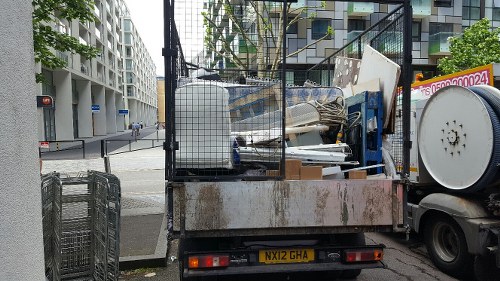 Risk assessment and safe systems of work
Before starting any clearance, a documented site survey must identify foreseeable hazards: asbestos, sharps, electrical risks, contaminated waste, fragile structures and invasive pests. Control measures include clear exclusion zones, safe lifting plans, two-person lifts for heavy items, mechanical aids and segregation of recyclables and hazardous material. Risk assessments should be recorded and accessible, and any residual risks communicated to the team and client.
Personal protective equipment (PPE) requirements are mandatory. Common PPE includes gloves, safety boots with toe protection, high visibility clothing, eye protection and respiratory protection where dust or fumes are present. PPE is the last line of defense and must be used in conjunction with engineering and administrative controls.
 Vehicles, plant and equipment
All vehicles and plant used by our rubbish company service area will be maintained to a safe standard, with routine inspections recorded in maintenance logs. Drivers and operators must hold relevant licences and be trained in safe loading, securing of loads and spill response procedures. Equipment such as trolleys, hoists and hand tools must be inspected before use and removed from service if defective.
Waste handling and segregation: Solid waste, recyclable materials and hazardous items must be segregated at source. Our teams will follow clear labelling and containerisation practices to prevent cross-contamination and to ensure proper disposal channels are used. For items suspected to contain hazardous substances (e.g., batteries, solvents, asbestos-containing materials), work must stop and a specialist contractor engaged where required. The rubbish removal service area operates a strict policy of not accepting unidentified hazardous materials without an appropriate plan.
 Training, competence and communication
Training is provided to all staff on manual handling, COSHH awareness (where applicable), vehicle safety, first aid and emergency procedures. Competence checks and refresher sessions are scheduled regularly. Clear lines of communication must be maintained between clients, site supervisors and operatives to manage day-to-day risks. Incidents, near misses and safety observations must be reported promptly and recorded for review and corrective action.
Incident management and emergency response
In the event of an incident, immediate measures should secure the scene and provide first aid. Emergency services should be contacted when required. All incidents are to be reported, investigated and analysed to prevent recurrence. The policy includes a simple step-by-step incident response flow and ensures that learning is fed back into operations across the waste removal service area.Monitoring, review and continuous improvement
Health and safety performance will be monitored through regular site audits, toolbox talks and performance metrics such as incident frequency, near-miss reporting rates and training completion. This policy will be reviewed at least annually and after any significant incident or operational change. The objective is continual improvement across our rubbish clearance, house clearance service and broader waste management activities.Legal compliance and standards: House Clearance Highbury commits to meeting applicable statutory requirements and recognised best practice for waste carriers and removal services. While this document outlines core obligations and operational standards, operatives must also refer to task-specific risk assessments and legal guidance relevant to particular waste types. Non-compliance with the health and safety policy may result in disciplinary action and suspension of duties until safe standards are re-established.
Summary of key controls
- Conduct site risk assessments and communicate residual risks.
- Provide and use appropriate PPE and mechanical aids.
- Maintain vehicles and equipment; ensure operator competence.
- Segregate waste and engage specialists for hazardous materials.
- Report incidents, carry out investigations and implement corrective actions.
Commitment statement: Every person working for or on behalf of House Clearance Highbury must prioritise safety. This policy is endorsed by senior management and forms part of our contractual and operational obligations within the rubbish company service area. Adherence protects our teams, clients and the wider community while supporting responsible waste removal and environmental stewardship.