House Clearance Highbury: Recycling and Sustainability Commitment
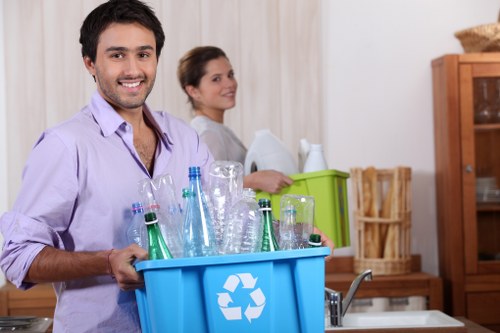 At House Clearance Highbury we place sustainability at the heart of every clear-out. Our approach to eco-friendly waste disposal and creating a sustainable rubbish area goes beyond removing items: we aim to extend product life, reduce landfill, and return materials into the local circular economy. This policy explains our targets, how we work with borough systems, and the practical steps we take for greener clearances across Highbury and neighbouring areas.
We operate with a clear reuse-first philosophy. Donating usable furniture and items to local charities and community projects is a priority before we consider recycling or disposal. Where items cannot be reused, they are sorted, dismantled, and processed to maximise material recovery. Our teams are trained to separate waste on-site in line with local borough guidelines, ensuring that paper, card, glass, plastics and food/organic residues are handled correctly.
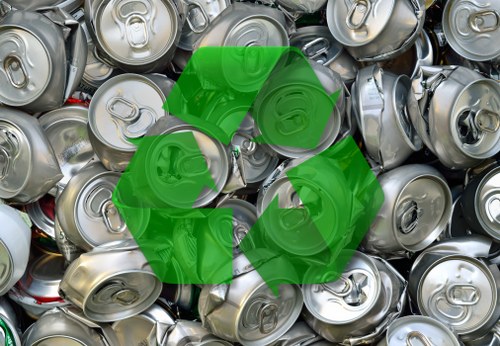 We follow the wider Islington and North London approach to waste separation, which emphasises clean streams for glass, metal, paper and card, and separate food and garden waste where possible. By aligning with the boroughs’ kerbside and transfer-station protocols we reduce cross-contamination and increase the likelihood materials will be recycled effectively at processing facilities.
Our Recycling Percentage Target and Metrics
Ambitious, measurable and locally-focused, our core target is to achieve a minimum 75% reuse and recycling rate on every house clearance within two years of collection. That figure is a combination of items reused, donated, repurposed, and materials sent to certified recycling streams. We record and report material flows internally to monitor progress and to highlight opportunities for improvement with clients and partners.To support transparency we log weight-based and item-based metrics: how much furniture is passed to charities, how many appliances are reclaimed for parts, and the tonnage sent to recycling facilities. These metrics help us refine route planning, stock management and training, so each clearance becomes more efficient and lower carbon over time.
 Our sustainability dashboard is used by field teams to note destination categories (charity, transfer station, energy recovery, landfill) so we can publish aggregated annual performance data and demonstrate progress toward our recycling goals without sharing personal client details.
Local Transfer Stations and Processing Facilities
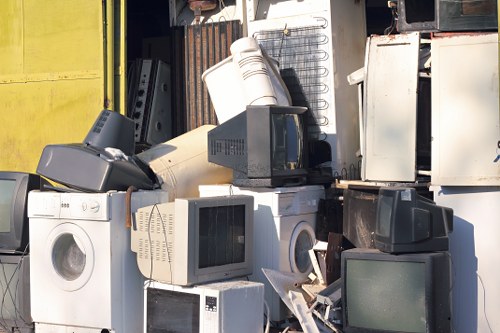
We collaborate with trusted local transfer stations and material processors serving Islington and surrounding boroughs. Where practical, materials are directed to facilities operated by regional waste partnerships like the North London Waste Authority and community-focused reprocessors. Local transfer stations enable efficient sorting, bulk batching of recyclables, and reduced onward transport emissions by keeping materials within North London networks.These transfer facilities specialise in recovery streams for mixed construction waste, bulky household items, mattresses, metal, wood, and plastics—maximising the chance that recovered materials are remanufactured or used as feedstock for new products. By using certified plants we ensure materials meet compliance standards and avoid illegal disposal routes.
Key operational measures include:
- On-site segregation into reuse, recycling, hazardous, and residual streams to meet borough standards.
- Prioritising transfer stations with robust auditing and take-back schemes.
- Working with processors that accept bulky items, like sofas and mattresses, for material recovery.
 Partnerships with charities form a central pillar of our sustainable clearance programme. We maintain active relationships with national and local organisations that accept furniture, clothing and small household items. Partners include redistributors, local community projects and social enterprises that refurbish items and create social value through employment and training. Items unsuitable for resale but still serviceable are redirected to creative reuse schemes or materials recovery organisations.
Examples of collaborative activities are scheduled collection days for large donations, joint community reuse events, and pre-clearance assessments to ensure valuable household goods are offered to charities first. These partnerships reduce pressure on disposal systems and help keep high-quality items circulating in the community.
 We also coordinate with local authority programmes that encourage reuse, such as furniture vouchers for residents in need and support for community reuse hubs. This integrated approach ensures that more than just materials are conserved: we preserve social and economic value too.
To reduce emissions associated with transport, our fleet includes low-carbon vans and vehicles selected for efficiency. We deploy electric vans on urban routes within Highbury and neighbouring boroughs, and use hybrids or Euro 6 diesel options for longer runs. Route optimisation software reduces empty mileage, and consolidated collections minimise the number of journeys required per clearance.
Low-carbon logistics are complemented by staff training in eco-driving and sustainable packing techniques to increase load efficiency. For dense urban clearances we sometimes use cargo e-bikes or micro-delivery solutions to transfer small bulky items to local reuse points, further cutting emissions in congested street environments.
Simple actions we take on every job:
- Pre-clearance audits to identify items for donation or reuse.
- Segregation of recyclables on-site to meet borough separation rules.
- Use of low-carbon vehicles and route consolidation to reduce transport emissions.
- Referral networks to charities and community hubs to keep items in use.
Our commitment to a greener version of house clearance in Highbury is ongoing and pragmatic. By aligning with borough waste separation approaches, partnering with local charities, using transfer stations responsibly, and investing in low-emission vehicles, we aim to make sustainable rubbish removal the default option for residents. Every clearance should minimise waste and maximise reuse, and our systems are designed to do just that.
We recognise that change is collaborative: clients, charities, processors and local authorities all play a part. House Clearance Highbury continues to refine targets and practices, sharing lessons learned and increasing the proportion of materials diverted from landfill. Our goal is straightforward—deliver reliable clearances while protecting the environment and strengthening the local circular economy.
Choose an eco-conscious house clearance option and help support a cleaner, more sustainable Highbury for everyone.